
New publication in Aerobiology: ambient fungal spores and asthma healthcare use in San Juan, 2018–2021
RIPLRT collaborator Dr. Benjamín Bolaños-Rosero and Dr. Félix E. Rivera-Mariani, with UPR trainees Claudia I. Pereira Moreira and Catalina S. Robles-Rivera, publish an open-access study linking daily fungal spore counts to 168,578 asthma encounters across the post-María recovery and COVID-19 years.
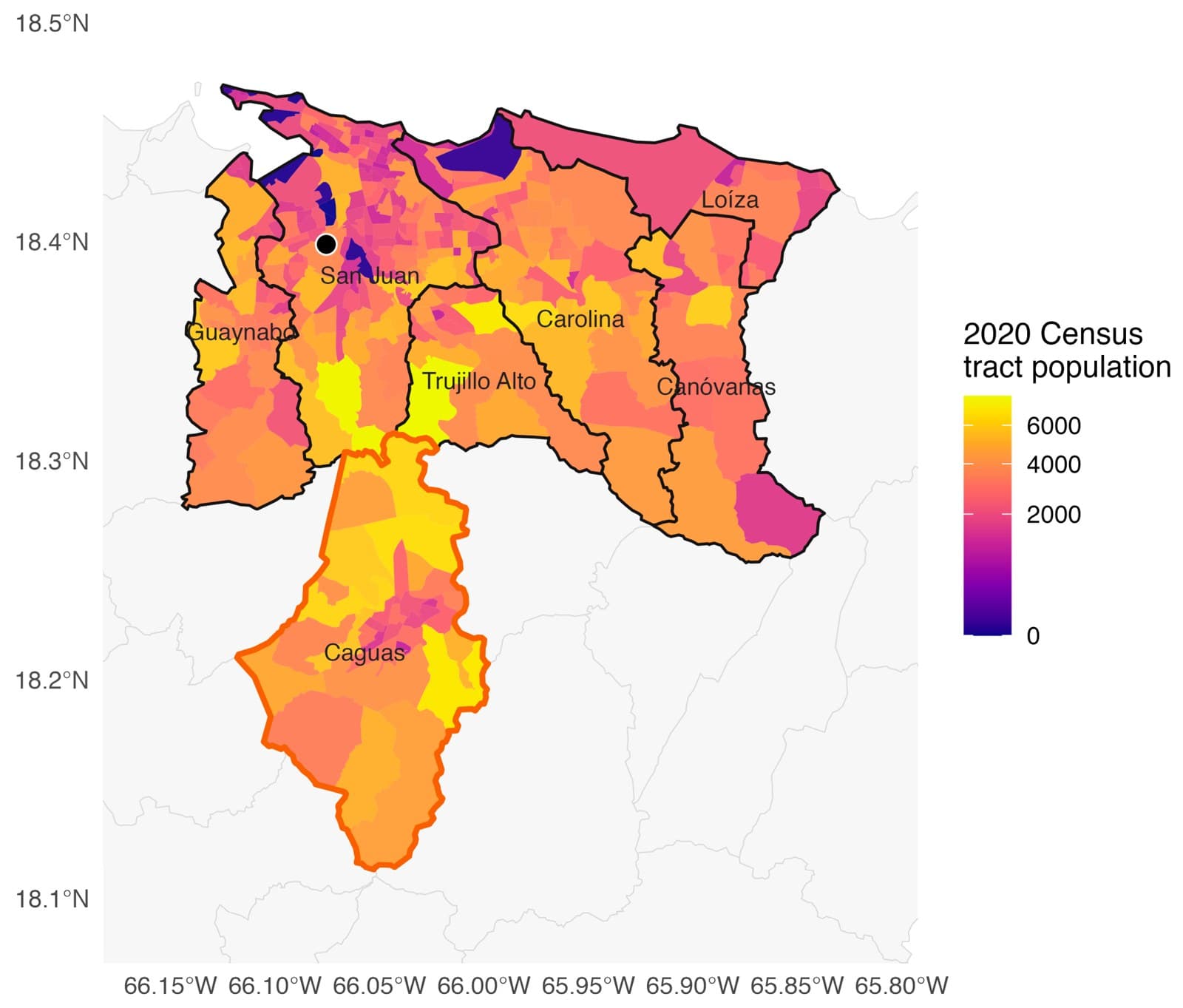
A new open-access article in the journal Aerobiology (MDPI) asks a question at the center of the Institute’s aerobiology work: are the associations between ambient fungal spores and asthma healthcare utilization in Puerto Rico stable across age groups and across very different periods of time? The study was led by RIPLRT collaborator Dr. Benjamín Bolaños-Rosero (Department of Microbiology and Immunology, University of Puerto Rico School of Medicine, Medical Sciences Campus) with Dr. Félix E. Rivera-Mariani, and coauthored with trainees Claudia I. Pereira Moreira and Catalina S. Robles-Rivera of the UPR School of Medicine, who presented early findings from this project at the Alliance for Clinical and Translational Research conference in San Juan in May.
Age- and Period-Stratified Associations Between Ambient Fungal Spore Exposure and Asthma Healthcare Utilization in the San Juan Metropolitan Area, Puerto Rico, 2018–2021. Aerobiology 2026, 4(4), 24.
Puerto Ricans experience among the highest asthma morbidity in the United States, and fungal spores are the most abundant aeroallergens in the island’s air. The study linked daily spore counts from the NAB-certified Burkard sampler on the rooftop of the UPR Medical Sciences Campus to 168,578 asthma encounters (emergency department, inpatient, outpatient, and urgent care) among residents of the six municipalities of the San Juan health region: Loíza, San Juan, Trujillo Alto, Guaynabo, Canóvanas, and Carolina. The four years span two very different contexts, the post-Hurricane María recovery (2018–2019) and the COVID-19 pandemic (2020–2021), so the analysis treated each as its own era and tested whether the spore–asthma relationship differed by period and by age.
Key findings
- Age-adjusted annual estimates were close to the null. Per 10,000 spores·m⁻³, rate ratios for encounter volume ranged from 0.990 to 1.011, and odds ratios for the share of encounters that were ED or inpatient ranged from 0.975 to 0.999.
- Age and period mattered for severity, not volume. The association with the ED/inpatient fraction differed by age group and period (interaction p < 0.001), whereas heterogeneity in encounter volume was weak (p = 0.05–0.28).
- One estimate survived multiple-testing correction. Of 48 period × age estimates, eight were nominally significant and one held after false-discovery-rate control: adults aged 75–84 in 2020 (fraction OR 1.28, 95% CI 1.12–1.47).
- No consistent short-term signal. A time-stratified case-crossover analysis of ED/inpatient events gave an inverse 2020 estimate for 3-day average exposure (OR 0.946, 95% CI 0.910–0.984), a null 7-day estimate, and directions that varied across years.
The authors are careful about what these results mean. The design is ecological, so the associations describe population-level co-occurrence of recorded encounters and ambient spores in this region. They do not establish individual-level risk, a biological latency, or the value of exposure-informed asthma management. What the study does show is that age structure and era-specific context, such as the shift in who sought care during 2020 and the overlap of pandemic restrictions with the dry, low-spore months, can distort unadjusted spore–asthma associations, and that explicit age modeling is necessary in environmental asthma analyses of this kind. The authors call for cohort studies with spatially resolved exposure assessment, individual-level outcomes, and immunological phenotyping in this high-burden population.
The work draws on the daily spore record that Dr. Bolaños-Rosero has maintained in San Juan for more than two decades, and on asthma claims provided by the Puerto Rico Health Insurance Administration. It was supported by the Puerto Rico Science, Technology and Research Trust. The article is published under a Creative Commons Attribution (CC BY) license.